July 17, 2026
Beef's up 11.8% — reprice before it eats your margin (plus a $38K cash trick + DOL-proof payroll)
June CPI: beef +11.8% YoY. Reprice, bank a cushion, audit your tip-credit payroll.
Morning, Chef — food costs are running the table this week, and beef is moving against you.
Fresh CPI data just dropped, and the trend line is the headache: your operating expenses are up 36% since early 2020 — and menus don't reprice themselves.
Today's lineup:
- 🥩 What June's beef spike forces on your menu
- 💰 How one operator banked $38K before a dead January
- 🧾 Tip-credit payroll that survives a DOL audit
- 💵 A 3-check cash-flow sweep while protein climbs
Let's get to it.
Quick Bites
Stat: June CPI put beef and veal at the top of the meat climb while poultry stayed flat — a reason to steer today's specials toward chicken. (BLS CPI, July 14)
Read: Restaurant operating costs jumped 36% from Feb 2020 to May 2026, per BLS — audit any menu price stuck at 2023 levels.
Try today: Pull the DOL's free Restaurant Employment Toolkit and sanity-check your tip-credit notice, overtime math, and minor-hour rules before payroll runs.
Watch: OpenTable's new AI Concierge now greets every homepage visitor — diners are finding tables through AI, not search, so check what your listing tells it.
Tactic: Cheese is trending up while butter still sits below last year — this week's commodity read is worth five minutes if you're updating cost cards.
📊 By the Numbers
CPI food away from home: +3.4% YoY ▁▁▂▂▃▄▅▅▆▆▇▇ · as of Jun 1, 2026 · BLS via FRED
Restaurant sales (food services & drinking places): $101.0B (+2.7% YoY) ▁▁▃▃▃▅▄▃▅▅▇▇ · as of May 1, 2026 · US Census via FRED
Coffee price inflation (CPI coffee): +12.9% YoY ▁▂▃▃▄▅▄▅▆▇▇▆ · as of Jun 1, 2026 · BLS via FRED
Beef Jumped 11.8% — Reprice Before It Eats Your Margin
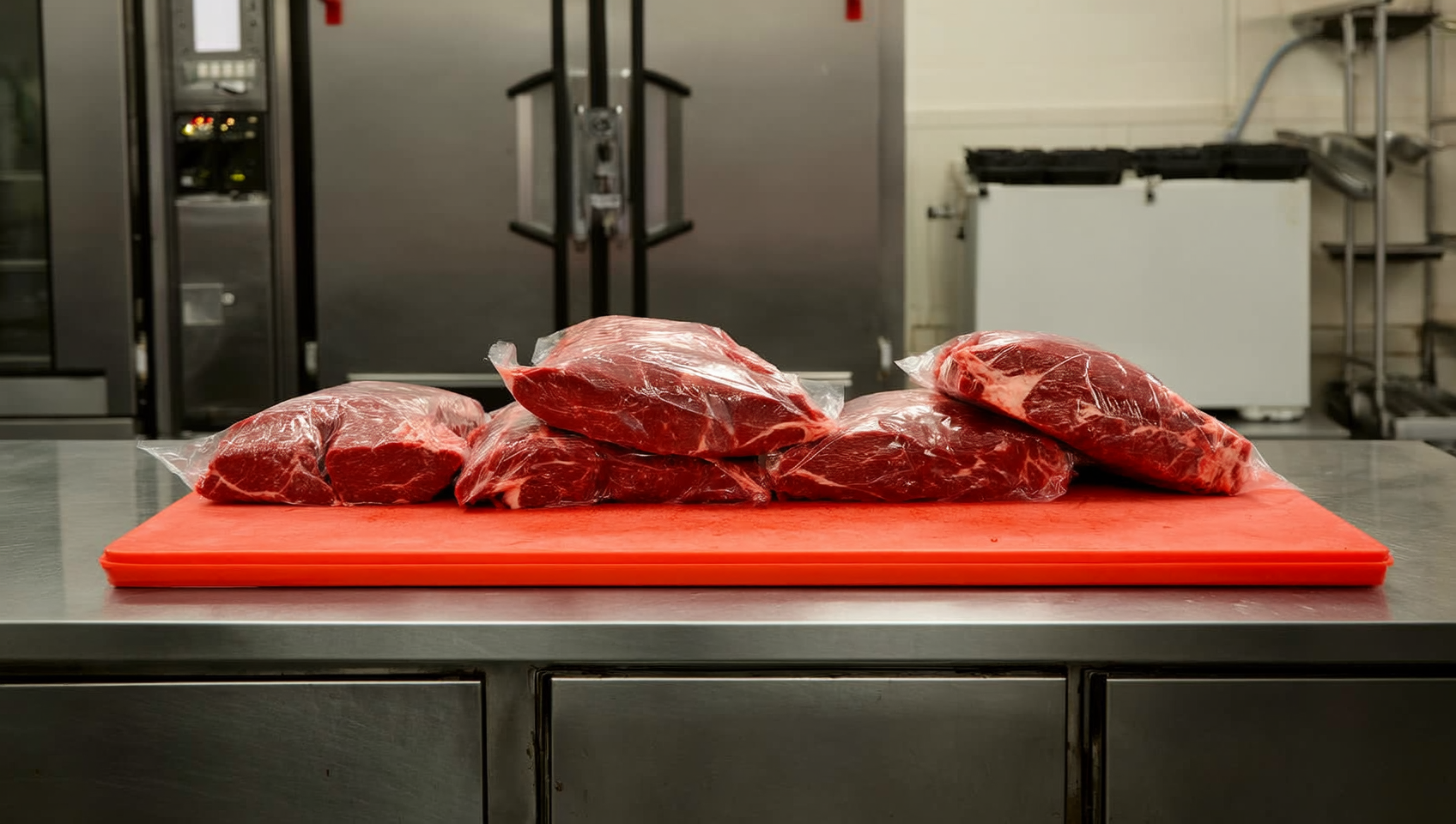
June CPI dropped July 14 — beef and veal are up 11.8% YoY, and your menu prices haven't caught up.
Meat is where the pressure lives right now, and it isn't uniform — so your response shouldn't be either.
- Beef and veal, +11.8% YoY. Your steak, burger, and braise plates are bleeding margin. Reprice or reportion these first.
- All meats, +7.4% YoY. Broad protein pressure — don't assume one swap fixes it.
- Poultry, flat (−0.1% YoY). Chicken is your relief valve. Push it in specials this month.
💡 Why it matters: A plate priced against last year's beef bleeds margin today. Every burger or steak at the old price gives back margin you've already earned — and with cheese trending up, combo plates compound it.
Do this today: 1. Pull your 5 top-selling beef items and recheck food cost % against current invoices. 2. Shift this month's specials toward poultry while it's flat. 3. Set a standing weekly commodity check so the next move doesn't surprise you.
Bottom line: protein moved unevenly, so your menu should too. The Dish's July 14 report flags cheese climbing while butter stays below last year — fold both into your cost cards before the weekend rush.
How One Seasonal Operator Banked $38K Before a Dead January

With beef pushing against your margin this week, a cash cushion isn't a slow-season problem — it's a right-now problem. (Composite case.)
A lakeside spot pulled 70% of its revenue between May and September. Every summer looked great. Every January was white-knuckle — rent due, no line at the door, and no line of credit the owner wanted to lean on.
The turning point wasn't a loan. It was a rule set during the good months: automatically move a fixed slice of every week's sales into a separate account, and flex variable labor down hard once the season ended.
The owner called it the "13th deposit" — each in-season week, sweep 5% of sales into a reserve account and don't touch it until things go quiet.
By January that reserve held roughly $38K — enough to cover rent and a skeleton crew with no outside financing required.
💡 The Move: Automate the sweep. Set the weekly transfer to fire on its own so willpower never enters the equation — the money's gone before you can spend it on a slow Tuesday.
Run Tip-Credit Payroll That Survives a DOL Audit

The DOL's Restaurant Employment Toolkit is getting fresh operator attention this week — and tip-credit mistakes are still the fastest way to turn a payroll shortcut into back-wage liability. Here's the setup that holds up.
1. Notice first. Give every tipped employee written tip-credit notice before you take a cent of credit. No notice, no credit. 2. Know your state. The federal floor is $2.13 cash + up to $5.12 tip credit = $7.25 (DOL minimum wage). But CA, WA, OR, MN, and NV allow no tip credit — check your state DOL first. 3. Enforce 80/20/30. No more than 20% of weekly hours or 30 continuous minutes on non-tipped side work at the tipped wage. Past that, pay full minimum. 4. Configure job codes. Set tipped vs. non-tipped codes in Toast Payroll or Gusto (~$40/mo + $6/person) so overtime calculates on full minimum wage, not $2.13.
Worked example: a server logs 40 hours, 8 of them on side work. 8 ÷ 40 = 20% — right at the line, so all 40 hours can stay at the tipped wage. Add one more side-work hour and you've crossed 20%; that overage gets full minimum wage.
5. Keep records three years. Time, tips, and notices — the paperwork is what wins the audit.
Bottom line: the tip credit is legal money, but only with the notice, the math, and the records behind it.
Food-Cost Inflation Is Squeezing Cash Flow — Here's How to Check Your Cushion

Beef is climbing on June's CPI and operating costs are up 36% since 2020 — so plenty of operators are running a thinner cash cushion than they think, because menu prices lag costs by weeks. You can't fix that reactively. Run this health check this week.
Check these three today: 1. Prime cost. Add food + labor as a % of revenue over your last 90 days. Creeping above 65%? Flag it now, not at year-end. 2. Supplier terms. Confirm your net-30/60 windows and renegotiate them now — summer is the time, before the slow season squeezes you. 3. Margin-risk SKUs. List the menu items with the highest beef and protein content. Those are the plates most exposed to this week's price move — watch them closely or reprice.
Do these three and you'll know your real cushion before the season turns, not after.
🧭 How to choose working capital for a seasonal restaurant cash gap?
For a seasonal restaurant bridging a slow-season cash gap, a business line of credit is the most structurally sound fit for most operators: draw during the dip, repay from peak revenue, and retain the facility for the next cycle without reapplying. Operators who do not yet meet credit thresholds should evaluate a short-term working capital loan as a bridge while building credit, and treat a merchant cash advance as a last-resort option given its daily cash-flow impact on already thin margins. Any operator still in peak season should prioritize building a dedicated reserve account before drawing on external capital.
💡 Bottom line: If your gap is recurring and your credit qualifies, use a revolving line of credit; if you have no credit access and need immediate capital, evaluate an MCA carefully against its daily cash-flow impact and factor rate; if the gap is one-time and payment-predictable, a short-term loan fits; if the need is longer-horizon, explore SBA 7(a); and if you are still in peak season, prioritize building cash reserves before any external financing.See all 5 compared →
The 5-Minute Edge Over Every Operator Who Skips Their Inbox
RestaurantOwners.news reads the CPI releases, the DOL rules, and the commodity reports so you don't have to — then hands you the one move that protects your margin. Operator-to-operator, no jargon, no filler. Forward it to the owner down the street who's still guessing at their food cost.
So You Don't Miss a Beat
Memphis closures — Nine spots shuttered in H1 2026 — a ground-level look at the mid-year closure wave in a mid-sized market.
Orlando outlook — Inflation and shifting habits are reshaping Central Florida dining — themes you'll recognize heading into H2.
Weekly commodity read — Cheese trending higher, butter still below year-ago — a fast read for buyers updating cost cards.
OpenTable AI — Its AI concierge now greets every visitor — audit your listing before the algorithm writes your story.
AI tool roundup — Orientation on AI scheduling, dynamic pricing, and voice ordering if you're evaluating options for fall.
Payroll + scheduling — Tip management, digital onboarding, mobile paystubs — the feature checklist operators actually care about.
SBA lenders — Named lenders with SBA track records — a starting point if you're shopping a loan this summer.
Operator Pulse
What's putting the most pressure on your P&L this month? Tap one — results in the next edition.
Useful Today?
Who We Are
RestaurantOwners.news is written by The Restaurant Owners Desk — operators covering the costs, labor, and tools that decide whether your restaurant makes money. Our promise: get smarter about running your restaurant in 5 minutes. Editorial is independent and reader-first; nothing here is investment, legal, or tax advice — check your own numbers and advisors before you act.
RestaurantOwners.news is a marketplace, not a lender. Sponsor and vendor content is always labeled.