The thin-credit restaurant operator's funding playbook for 2026
Sub-600 personal credit. Under 12 months in business. A real operating restaurant the bank won't fund. What independents in this profile are actually using in 2026 — and how to do it without ending up in an MCA stack you can't refinance.
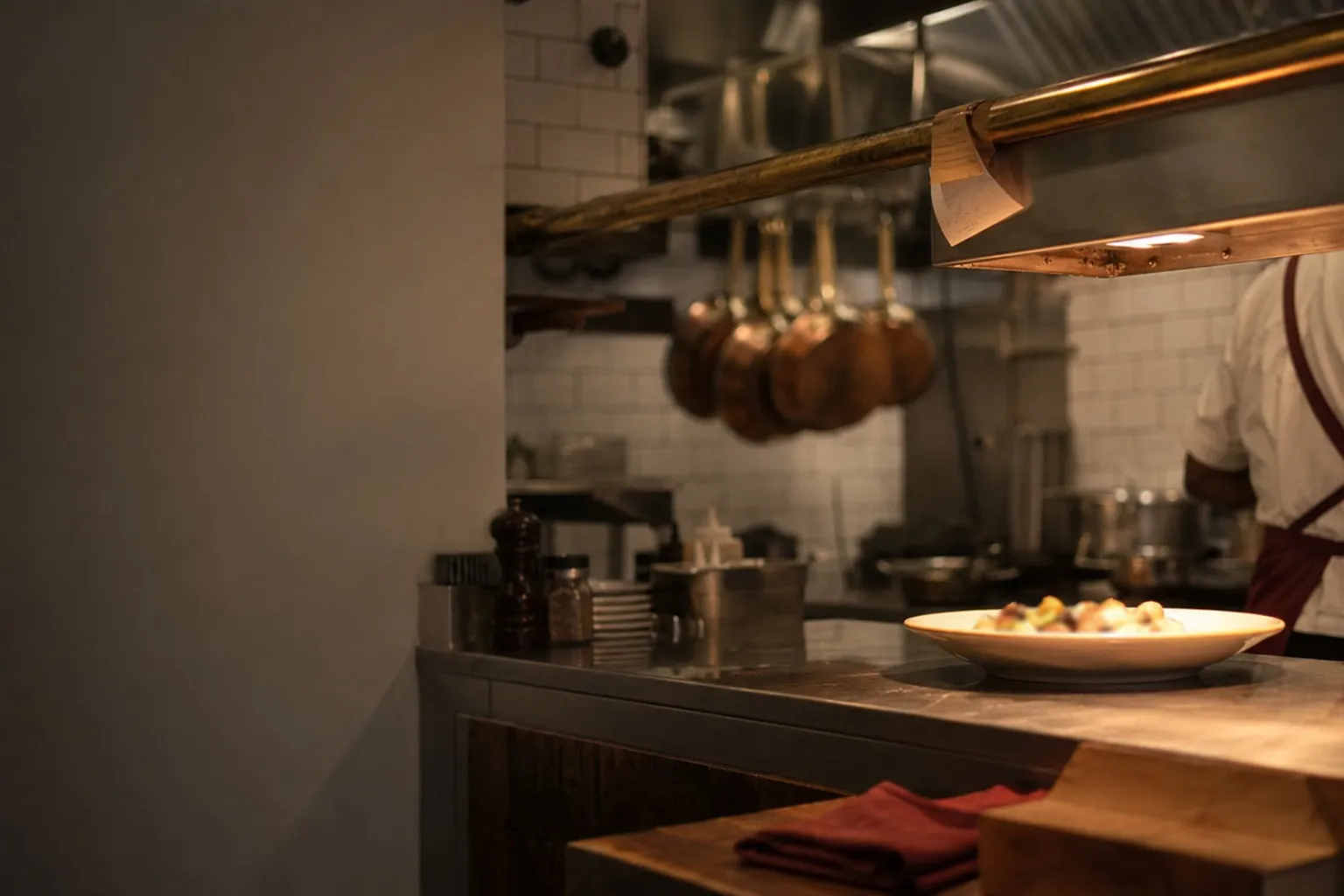
A real share of the independent restaurant operators funding 2026 do not look like the borrower profile bank and SBA underwriting was built for. The food truck on its second summer. The first-year cafe in a converted retail bay. The post-pandemic restart by an operator whose personal credit took a hit in 2020 or 2021 and hasn’t recovered. Sub-600 FICO, six to twelve months in business, real card volume on the POS, real food cost on the invoices, a real lease and payroll — and a flat decline from every conventional lender they’ve walked into.
The menu for this operator is narrower than the brochure’s front page. It still exists. But with the SBA refinance back door closed behind merchant cash advances and 42% of operators reporting their restaurant was unprofitable in 2025, the cost of stepping wrong has gone up. This is what’s actually available, what each product costs, and where the traps are.
What gets you declined at a bank in 2026
The 2026 bank baseline got tighter, not looser. Four lines decide most thin-credit declines.
The first is the credit floor. Through February 2026, SBA 7(a) underwriting carried a Small Business Scoring Service (SBSS) floor — the minimum had moved from 155 to 165 under SOP 50 10 8. Effective March 1, 2026, the SBA discontinued the SBSS requirement for federally regulated lenders, who now apply their own commercial credit analysis. That sounds like a loosening. It isn’t — lenders moved the thin-credit decline off a single score onto a broader composite that still penalizes a sub-600 personal FICO heavily.
The second is debt service coverage. A DSCR below 1.25 — net operating income covering proposed debt service by less than 1.25 times — fails most bank-tier restaurant underwriting regardless of credit score, and is the most common silent decline reason for operators running tight on labor and food cost.
The third is time in business. Banks and the SBA generally want two years of operating history with matching tax returns. An operator at six or nine months — even with strong card volume — is structurally outside the window.
The fourth is the operator’s track record. Open tax liens, prior business defaults, recent collections, or an unresolved judgment end most bank underwriting before the deal is read. None of these are unusual for an operator whose previous restaurant closed in 2020 or 2021. They are also disqualifying.
The thin-credit operator usually clears one or two of these gates and fails the others. That is the decline.
What non-bank lenders look at instead
Specialist non-bank lenders in this segment don’t skip risk analysis — they price it differently. The inputs change.
Daily card receipts off the POS are the strongest single signal. A consistent four-to-six-month run tells the underwriter the business is real, the location works, and the operator can run a shift. Daily volume, day-of-week consistency, and trend direction matter more than any single month’s total.
Bank statement cash flow over three to six months is the second input — revenue regularity, average daily balance, negative-balance days, NSF count. A clean window offsets a meaningful amount of personal-credit weakness.
Time at the current location and lease quality matter more than time in business. An operator who restarted but has been at the current address six clean months, on a multi-year lease with the landlord current, reads very differently than a six-month operator on a month-to-month sublet. Owner-operators also get better outcomes than absentee owners — the underwriter is reading single-point-of-failure risk.
POS-volume-based lender matchers for newer restaurants route operators toward funders that read these inputs rather than the credit-score gate that’s already declined them. Specialist non-bank decisions typically land in 24 to 72 hours; bank and SBA timelines run 30 to 90 days.
The funding products that fit the profile
Four products do most of the work for thin-credit operators in 2026. Each fits a different cash-flow problem.
Merchant cash advances
The MCA is the most-used and most-misunderstood product here. Legally it isn’t a loan — the funder buys a percentage of future card sales at a discount. Restaurant factor rates in 2026 land between 1.15 and 1.45, with daily holdback at 8% to 18% of card receipts. On a typical six-to-twelve-month repayment, that’s a 40% to 80% effective APR, and higher on short paybacks.
The use case is narrow. An operator with steady daily card volume but a credit profile or operating history that disqualifies it from bank or SBA lending can use an MCA to fund a payroll, a refrigeration replacement, or a seasonal stockup in 24 to 48 hours. MCA funding routes for thin-credit restaurant operators can underwrite operators with sub-600 personal credit and as little as six months in business — a profile with no other product available to it. The cost is real and should be priced against the alternative, which for many operators here is no funding and a missed payroll. Appropriate when the alternative is materially worse for the business; inappropriate as a substitute for product-mix discipline.
Daily and weekly ACH working capital
A growing share of the specialist market has moved off the MCA structure onto fixed-payment ACH working capital. Similar from the operator’s seat — fast approval, short term, daily or weekly draws — but the structure is a loan with a stated payment, not a sale of future receivables. Effective costs typically run 25% to 60% APR for thin-credit deals. The advantage is the fixed payment, easier to model and, depending on the agreement, easier to refinance.
Equipment financing
Anything titled, serialized, or installed in a kitchen — combi ovens, walk-ins, hoods, POS hardware, refrigeration — can be financed against the asset itself. Terms tied to expected asset life, often 24 to 84 months. Rates in 2026 land in the 8% to 16% range, materially lower than unsecured working capital because the underwriting reads the asset more than the operator. Thin-credit operators often qualify here when they don’t qualify for unsecured.
Personal-credit-backed startup loans
For pre-revenue operators — six months or under, no card-volume history — funding usually comes from personal credit rather than the business’s. Term loans, business credit cards, or an unsecured personal line. Dollar amounts are smaller and rates are credit-score-driven. The most common source for first-year food trucks and pop-ups that haven’t built the POS history a specialist business lender wants.
What to do BEFORE applying
The single biggest determinant of approval rate and pricing for a thin-credit operator is how clean the application is on day one. Three pieces of work, done in parallel over the 30 to 60 days before applying, change the outcome.
Rebuild personal credit in parallel. Pull all three bureau reports. Dispute inaccuracies. Bring revolving balances under 30% utilization. Settle collections within statute. Even a 20-to-40-point move from 580 to 620 changes the price of every product on the menu.
Stack three to six months of POS reports cleanly. Confirm the POS exports cleanly, deposit reconciliation matches what hits the bank, and reporting runs on the window the underwriter will ask for. A clean export and matching bank statement window moves materially faster than a package with a mismatch.
Get the lease and licenses current. The most common delay item at any tier is the lease — wrong copy, expired, missing landlord countersignature. Same for food-handler certifications, liquor licenses, and operating permits. Bring all of these current before the application, not during it.
The MCA trap and how to avoid stacking
With the SBA’s MCA-refinance path now closed under SOP 50 10 8, a first MCA in 2026 carries no clean consolidation exit — which makes the stacking risk that follows it materially more dangerous than it was in 2024.
The trap is the second and third MCA. An operator who funded a payroll on a first MCA, hit a slow week before it paid down, and took a second to cover the holdback on the first — then a third — has stacked. With the SBA refi door closed, a stacked operator has no clean exit, and the 2026 default rate on restaurant MCAs has risen as more of these stacks have run out of runway.
The discipline that prevents the stack is straightforward. One MCA, sized to the actual cash need, with a stated end-of-paydown calendar. No second MCA without the first finished. If the first didn’t solve the cash problem, the answer is not another MCA — it’s a structural product change, a cost reset, or a hard conversation about whether the model is working at the current location.
The walk-away test on any fast funding offer is short. Factor rate above 1.45, holdback above 18%, an unpaid MCA already on the books, or a funder willing to fund without reading three months of bank statements and a POS export — not a deal to take. Specialist matchers will route to multiple funders and decline to route an operator who’s already stacked. That decline is a feature, not a bug.
The bottom line
The thin-credit restaurant operator is not a problem borrower — they are a working operator whose risk picture the bank is not built to read. The non-bank market around that gap is real, and the products in it are useful inside their proper window. Equipment financing for the heavy assets. ACH working capital or a sized MCA for the genuine short-term cash gap, priced honestly against the alternative. Personal-credit-backed funding for the pre-revenue runway. And parallel work on the credit, the POS reporting, and the lease — so the next lender conversation is a different one. The 2026 menu is narrower than it looks at the bank and wider than it looks on the decline letter. The operators funding this year well are reading the actual menu and ordering once.