The 2026 restaurant financing map: what working capital, MCAs, equipment, and SBA actually cost
Independent operators are funding a tighter year with a wider product mix in 2026. What each financing type costs, where it fits, and the SBA rule change that just closed the MCA-consolidation back door.
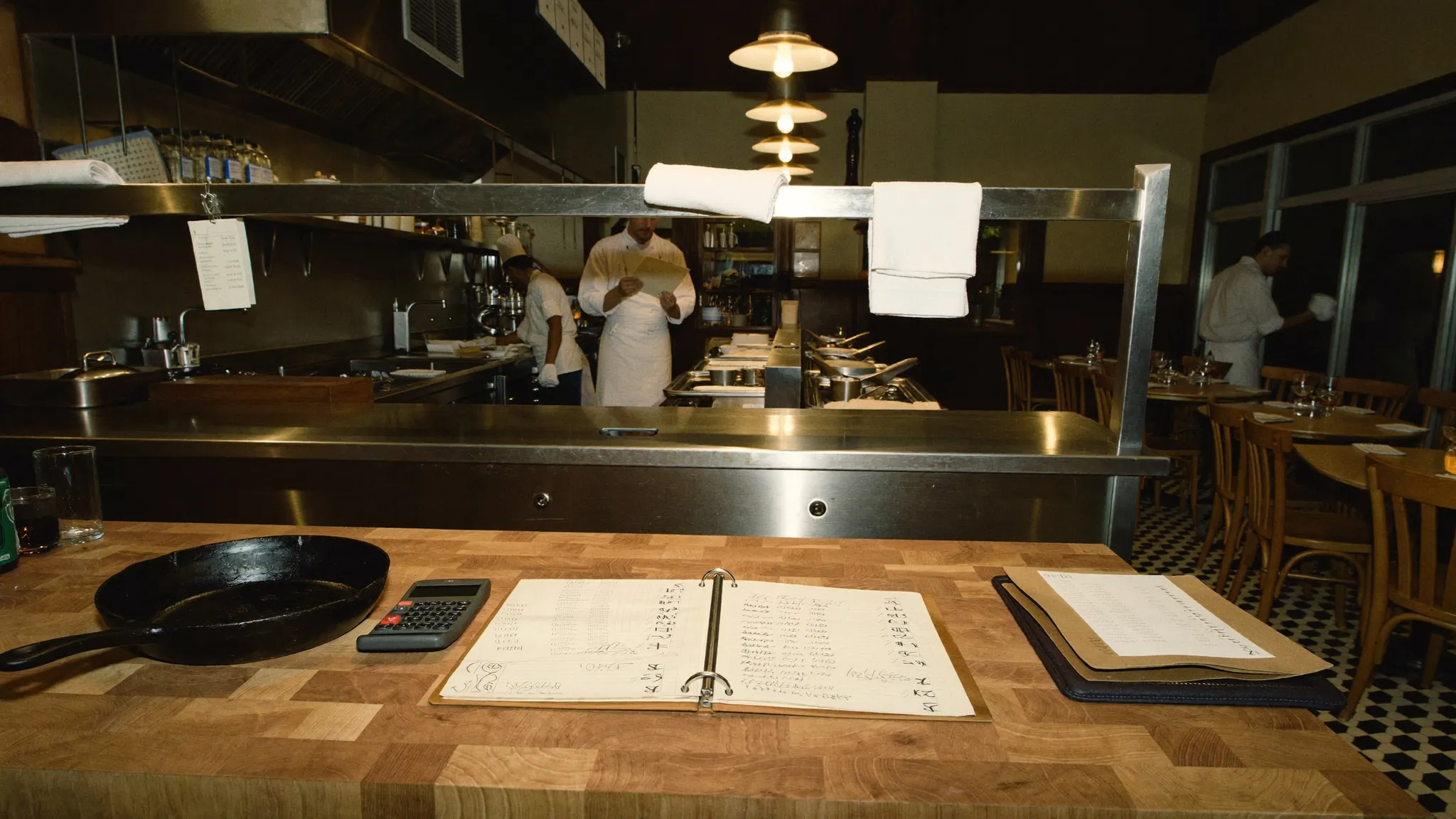
The 2026 restaurant operator is funding a year that, on paper, should be easier than 2024 was. Industry sales are projected to clear $1.55 trillion this year, per the National Restaurant Association’s February State of the Industry release — nominal growth of 4.8%, real growth of 1.3%. Most of the gain, however, is menu pricing rather than cover count. And 42% of operators told the NRA their restaurant was not profitable in 2025. That gap — between top-line growth and the bottom line — is what the financing question in 2026 is really about.
The cost picture explains why. Food-away-from-home prices are running roughly a third above the 2019 baseline. USDA ERS data has retail beef up 14.8% year-over-year in April, with eggs still working off the post-HPAI peak. Full-service restaurant employment as of March 2026 was still 193,000 jobs — 3.4% — below its pre-pandemic peak, meaning the operators that survived are doing it with thinner crews and higher unit labor cost. Add the swipe-fee, insurance, and energy lines that more than 9 in 10 operators called significant cost headwinds in the same NRA survey, and the working-capital squeeze is structural, not seasonal.
This is the operator’s map of how restaurants are funding through that squeeze in 2026 — what each financing product actually costs, where each fits, and what changed at the SBA level that materially reshapes the menu.
Why generic small-business lending misreads restaurants
Most small-business credit products are designed around a baseline that looks nothing like a restaurant P&L. Revenue arrives daily, in card volume that varies by day-of-week, weather, and reservation mix. Cost of goods is dominated by a perishable inventory line that turns weekly. Labor is the second-largest line and carries multi-state wage and tip-credit complexity that changes year to year. Most underwriting models calibrated to monthly-recurring SaaS or steady retail receipts simply price the daily variance as risk.
That’s a real underwriting picture. Industry analyses of SBA portfolio data have consistently put the accommodation and food services charge-off rate as the highest of any industry — typically reported in the 23–28% range against an overall SBA 7(a) portfolio of 2–3%. Generic small-business lenders see that headline and tighten the funnel, which is why the bank decline rate for independent operators in 2026 stays high even when the individual business is performing. A category of restaurant-specialist eligibility guides for restaurant loan applicants and matchers has emerged in response — products designed to read daily POS volume, bank statement cash flow, and time-in-business as a more accurate underwriting signal than a credit score alone.
The four financing products restaurants actually use in 2026
Most independent operators end up using a combination of four products. Each fits a different cash-flow problem.
Working capital lines
A revolving line of credit is what funds the gap between today’s deposit and Friday’s payroll, or covers the produce order on the day a new menu launches. For restaurants in 2026, line amounts typically run $10,000 to $500,000, with repayment terms in the 6–18 month range. APR on bank-tier lines for highly-qualified operators sits in the 6–12% range; alternative lenders run 10–25% depending on revenue history and credit profile. Bank-tier eligibility usually requires 24+ months in business and demonstrated profitability — which immediately rules out a chunk of the operator base. Specialist non-bank working capital for restaurants tends to underwrite on 6 months of revenue history and 3 months of bank statements, with decisions in 24 to 72 hours. The trade-off is price for speed: you’ll pay a premium for the faster approval and the looser eligibility, but the line gets opened in a week rather than three months.
Merchant cash advances
The MCA is the most-discussed and most-misunderstood restaurant financing product in 2026. The structure isn’t a loan in the legal sense — the funder buys a percentage of future card sales at a discount. Restaurant-specific factor rates currently land between 1.15 and 1.45, with daily holdback at 8–18% of card receipts. Translated to APR, that’s a 40–80% effective cost on typical repayment timelines, and meaningfully higher on short paybacks. The case for MCAs is narrow but real: if a business has steady daily card volume but a credit profile or operating history that disqualifies it from bank or SBA lending, an MCA can fund a payroll, a refrigeration replacement, or a seasonal stockup in 24 to 48 hours. Specialist matchers in the MCA funding for thin-credit restaurant operators segment can route operators with sub-600 personal credit and as little as six months in business — a profile that has no other product available to it.
The 2026 wrinkle on MCAs is the SBA rule change under SOP 50 10 8: MCA balances can no longer be refinanced through an SBA 7(a) loan, because the updated guidance narrowed eligible refinanceable debt to true loan obligations. The escape valve that some operators had used to convert expensive short-term MCA stacks into long-term SBA debt is closed. Existing MCA payments also continue to count against a borrower’s debt-service capacity in any subsequent 7(a) underwriting — meaning the first MCA is now materially more consequential than it was in 2024, on both sides of the ledger.
Equipment financing
Anything titled, serialized, or installed in a kitchen — combi ovens, walk-ins, hoods, POS hardware, kitchen automation — can usually be financed against the asset itself. Term length is typically tied to expected asset life, often 24 to 84 months. Rate ranges depend heavily on the lender mix, but most restaurant equipment financing in 2026 lands roughly in the 8–16% range. The structural advantage is that the underwriting reads the asset more than the operator, which is why approvals are often quicker than for unsecured working capital — even for newer businesses.
SBA 7(a) and 504
SBA is still the structurally cheapest capital available to a restaurant operator that qualifies. 7(a) variable rates in May 2026 are pricing roughly in the 9.50% to 11.75% all-in range, anchored to a prime rate at 6.75% as of May 2026 plus SBA-capped spreads (Prime + 2.25% for loans under seven years, Prime + 2.75% for seven-plus years). 504 financing for owner-occupied real estate prices below that. The catch is the underwriting and timeline. SOP 50 10 8 lowered the “small loan” threshold from $500,000 to $350,000 — loans above that now require full underwriting, which adds weeks. The minimum business credit score moved from 155 to 165, and as of March 2026 the SBA discontinued the SBSS score requirement for federally regulated lenders entirely, which now apply their own commercial credit analysis instead. The underwriting bar didn’t get easier; it just moved off a single number. Franchise borrowers should also check that their brand is current on the Franchise Directory recertification, which has an extended June 30, 2026 deadline. None of this changes the product. It changes who clears the gate and how fast.
Restaurant-type breakdown: where each financing type fits
The pattern repeats across the major restaurant operator segments. Each has card-volume, equipment-cycle, and credit-history characteristics that specialist lenders have learned to underwrite — and that generic small-business lenders flatten or penalize.
Independent full-service operators
Single-location independents — the bistro, the neighborhood Italian, the seafood spot — get the worst reception from generic lenders and the most natural fit from specialist matchers. The product stack that tends to work: a small-to-mid working capital line for cash flow smoothing, equipment financing for any kitchen replacement, and SBA only if the business has the time-in-business and tax-return depth to clear the qualifying bar. A POS-volume-based lender matcher for independent restaurants routes operators in this segment toward funders that read daily card receipts and bank statements as the underwriting signal — the inputs that actually move on a single-unit independent’s P&L — rather than the bank-style credit-score gate that’s already declined them.
Fast-casual and QSR
Higher card-receipt density makes this segment a natural fit for both working capital lines and MCAs — daily volume is the strongest signal a non-bank underwriter has, and fast-casual operators tend to have more of it per dollar of revenue than full-service does. Equipment cycles are also faster (POS, beverage equipment, sometimes branded build-outs), which makes equipment financing more frequent. Non-franchise QSR operators draw from the same matcher pool as independents; franchised QSR operators sit in the next segment, with a meaningfully different underwriting picture even when the unit economics look identical on paper.
Franchise operators
Franchisees are a different underwriting picture because the brand is a meaningful part of the risk model. Specialist franchise-restaurant acquisition and growth lenders underwrite against franchise brand strength, the franchisor’s liquid-capital requirement, and operator experience — and can structure SBA-eligible acquisition deals up to the SBA 7(a) program ceiling, generally cited around $5 million. The product fit is usually different than for independents: acquisition financing for the first unit, growth financing for the second through fifth, and remodel-mandate financing when the franchisor pushes a refresh cycle.
Multi-unit and established operators
Operators with three or more units and clean books usually have a real banking relationship and can get a competitive line at bank rates. The decision at this stage isn’t whether to use bank versus specialist — it’s whether the bank line is sized correctly for seasonal swings and equipment cycles, and whether the operator has a secondary lender of record for the cases where the bank says no fast enough to be useful.
When generic still wins
There are three situations where conventional bank or SBA lending is unambiguously the right answer for a restaurant operator.
Owner-occupied real estate purchase. SBA 504 is structurally the cheapest capital available for buying the building you operate in. The timeline is long, but the rate and term make it worth waiting if the deal allows.
Long-tenure operators with clean books and time. A community bank line will undercut every specialist product on price for an operator with five-plus years of consistent revenue, a strong balance sheet, and the patience to walk the bank through the story. Specialists win on speed and approval rate, not on rate.
Ticket size above $5M. Most specialist restaurant lenders cap somewhere between $500,000 and $5 million. Above that, the operator is back in conventional bank or SBA territory regardless of how restaurant-fluent the alternative lender is.
Before you apply: the restaurant operator’s documentation checklist
Before approaching any lender — specialist or conventional — have the following ready. The difference between a one-week approval and a six-week approval is almost always how clean the package is on day one.
- Three to six months of business bank statements — all operating accounts, not selected ones.
- Year-to-date P&L plus prior-year tax return — and two prior years of business tax returns if applying for SBA.
- A current POS export of daily card sales — the most predictive document an alternative lender will look at.
- Aged accounts receivable report if you do any catering or commercial billing.
- A current copy of your lease — the single document SBA lenders most often surface as a delay item.
- Food-handler certifications, liquor licenses, and operating permits — current, in the operating state, with no lapses.
That’s it. Anything more sophisticated comes from the underwriter, not the applicant.
The bottom line
The restaurant operators funding 2026 well are the ones who’ve stopped treating any single product as the default — and started ordering off the menu by use case. Specialist working capital for the speed-sensitive cash flow gaps. Equipment financing for the heavy assets. An MCA only when the alternative is no funding at all, and now with the SBA refinance back door closed behind it. SBA for the long-horizon spend, when the runway allows. The operators who avoid regret are the ones who price the product against the actual monthly cash, not against the cheapest headline rate. The financing menu in 2026 is wider than it was. So is the cost of choosing the wrong item on it.