Restaurant equipment financing in 2026 — when to finance, when to lease, and what asset-backed lenders actually want
Combi ovens, walk-ins, hood systems, and POS hardware all carry serial numbers — which means they can be financed against the asset itself. The 2026 economics of equipment loans vs. operating leases for restaurant operators, and what asset-backed lenders look at on the application.
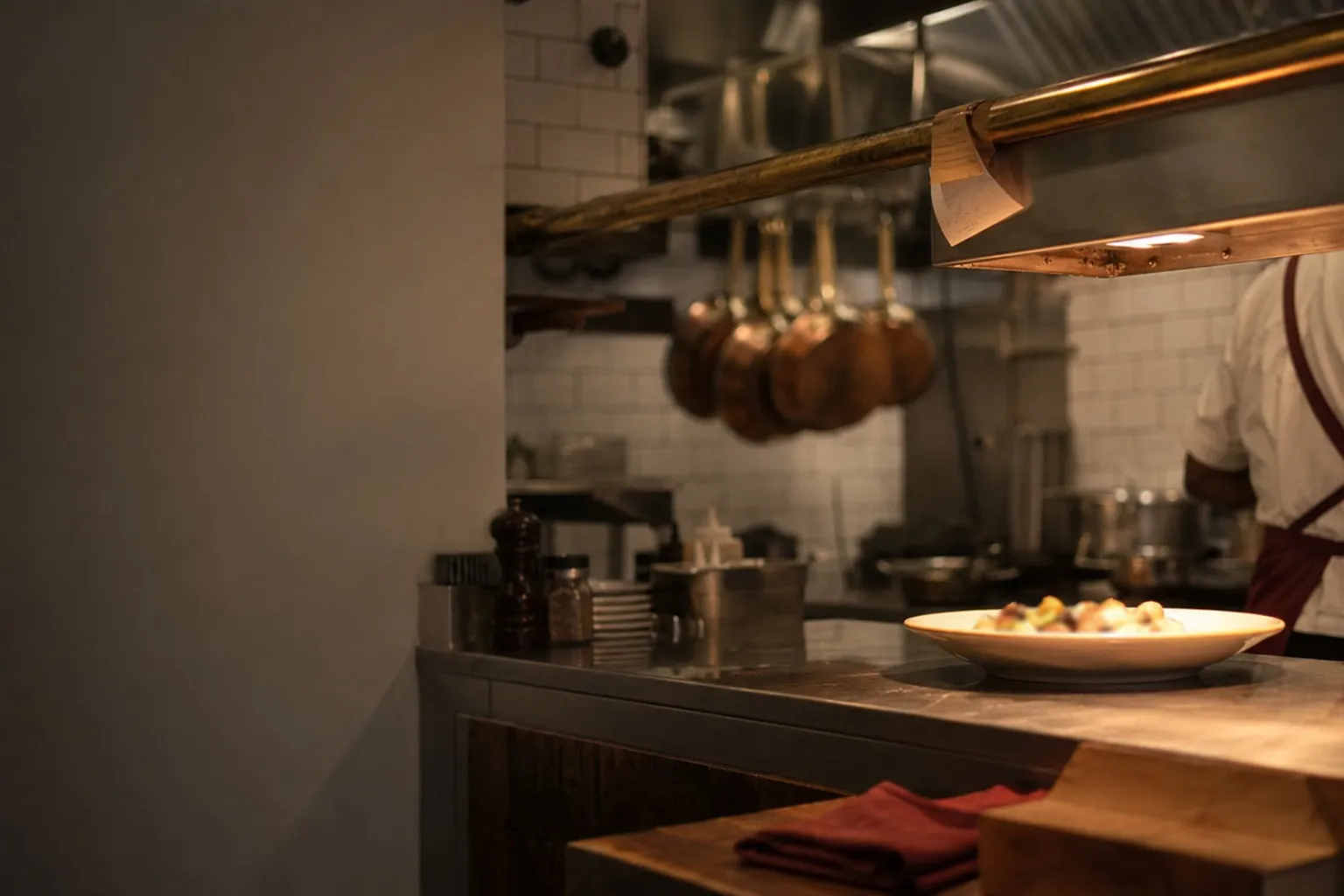
It is April, and the combi oven at a 90-seat neighborhood spot stops holding temperature mid-service. The factory tech prices the board at $4,800 and notes the steam generator is on its last legs anyway — full replacement is $22,000 installed. Two months later, in June, the walk-in compressor fails on a Thursday afternoon. Replacement quote $11,800, with a lead time the operator does not have. Cash is already tight from a beef line running 14.8% above last spring. Three financing options are on the table — an equipment loan, an operating lease, and putting the whole thing on a working-capital line — and the right answer is not the same for each piece of equipment.
Equipment is the easiest restaurant debt to underwrite because the asset secures the loan; the menu of products is wider and the cost differences between them are larger than in most other categories of restaurant financing. The 2026 economics tilt toward financing rather than leasing for long-life kitchen assets — but the tilt is not uniform, and the wrong structure on a five-year hood deal compounds into real money.
Why equipment is the easiest restaurant debt to underwrite
Working-capital and MCA underwriting is a bet on the operator: the lender prices the probability that this business will keep generating bank deposits. Equipment financing flips that. The underwriter prices the equipment first, the operator second. A Rational combi, a Manitowoc ice machine, a Hoshizaki walk-in, a Toast POS terminal — each has a serial number, a known secondary-market value, and a known service life. If the operator stops paying, the lender repossesses and recovers most of the principal.
That collateral profile is why equipment approvals run faster than unsecured working capital and why newer businesses can clear the gate. An operator open 10 months with a 660 personal credit score will get declined for most working-capital lines but can typically secure equipment financing on a properly priced combi oven, because the lender’s downside is bounded by recovery on the unit. The trade-off is a lien on the asset — on default, the unit goes back. For most restaurants that is an acceptable trade.
Equipment loan vs. operating lease vs. capital lease
The three products that come up on every equipment quote behave differently on taxes, on balance sheet, and on what the operator owns at the end of the term.
An equipment loan is the most straightforward. The lender finances the purchase, the operator owns the asset from day one with a lien against it, and monthly payments amortize principal and interest over a term tied to useful life. Ownership means the operator depreciates the asset and can take a Section 179 deduction in the year of purchase if they qualify. For 2026, the Section 179 deduction limit is $2,560,000 with a phase-out beginning at $4,090,000 in total qualifying purchases — a ceiling no independent restaurant is realistically going to hit. Talk to your accountant before assuming the deduction applies; entity structure, taxable income, and bonus-depreciation interactions all change the calculation.
An operating lease is structured as a rental. The leasing company owns the equipment; the operator pays a monthly fee to use it. At term-end, the operator returns the unit, renews, or buys it out at fair-market value. Payments are typically deductible as operating expenses rather than depreciated. Monthly payment is usually lower than a loan payment on the same equipment, but the operator owns nothing at the end. Operating leases make sense for assets where ownership at term-end is not valuable — POS hardware that will be obsolete in five years, refrigeration in a space the operator may exit, anything with negligible resale value.
A capital lease ($1 buyout or finance lease) is functionally an equipment loan dressed as a lease. The structure is rental payments with a nominal buyout at term-end — often $1 or 10% of original cost. Tax treatment usually mirrors a loan. The product exists because some operators prefer the simpler documentation while preserving the economics of ownership.
The decision is about asset life and ownership value at term-end. Combi oven with a 15-to-20-year service life, a walk-in that will outlive the lease, a hood system bolted to the building — finance, do not lease. POS hardware, kitchen-display screens, anything with a software dependency that will be obsolete before the lease ends — lease, do not finance.
What asset-backed lenders look at in 2026
The application stack for equipment financing is shorter than for working capital and meaningfully shorter than for SBA. A 2026 equipment lender reads the equipment quote (spec, price, supplier name), three to six months of business bank statements, the most recent year of business tax returns, and the operator’s personal credit report with a signed personal guarantee. The PG is almost universal on independent restaurant equipment financing regardless of business credit profile; on deals under $50,000 it is rarely negotiable.
The equipment quote anchors the loan-to-value calculation: the lender funds 80–100% of cost depending on asset category and operator profile, so the quoted price needs to match the supplier’s standard pricing and the unit needs to be one the lender’s collateral desk has financed before. Off-brand or used equipment from non-dealer sources is harder to finance and prices higher when it can be financed at all. The equipment loan documentation requirements for restaurants checklists give a reasonable baseline of what the application stack looks like in 2026.
Time in business and revenue trend matter more than on asset-only deals in other industries, because restaurant equipment is depreciating collateral that can be hard to remarket from a closed location. A lender pricing a combi oven for an 18-month-old single-location operator is pricing the recovery risk on a unit they might have to pull from a shuttered storefront in 14 months. That risk shows up in the rate.
Rate ranges in 2026
Restaurant equipment financing in 2026 prices roughly in the 8–16% APR range, with most independent-operator deals landing in 10–14%. The cleanest pricing — 8–10% — goes to operators with three-plus years in business, personal credit above 720, and an asset category the lender prefers (long-life, well-known brand, easily remarketed). The high end — 14–16% — is where newer operators, lower-credit-tier deals, and shorter-life assets land. Prime sits at 6.75% as of May 2026, and most non-bank equipment lenders price as a spread over a reference rate that tracks Prime.
Terms run from 24 to 84 months. The rule is straightforward: term length should be tied to asset life and should not exceed the operator’s reasonable expectation of remaining in the space. Financing a 60-month hood deal in a 36-month lease with no renewal certainty creates an asset-liability mismatch the operator will pay for if they exit. Specialist matchers — including the POS-volume-based lender matchers for independent restaurants that route equipment requests alongside working capital — exist because the lender mix and pricing for restaurant equipment is wider and noisier than a single bank relationship will surface. None of these matchers can guarantee an approval or a specific rate, but they do compress what would otherwise be 8 to 12 standalone applications into a single intake.
Common categories restaurants are financing in 2026
Combi ovens and other long-life cooking equipment — $15,000 to $40,000 typical for commercial combi units, longer terms (60 to 84 months), lower rates. The asset class lenders prefer.
Walk-ins and refrigeration — $20,000 to $80,000 for a full walk-in build, replacement compressor and condenser packages running $8,000 to $20,000. Long-life when properly maintained. Standard 60-month financing.
Hood and HVAC replacement — $25,000 to $60,000 for a full make-up-air and hood replacement on a mid-size operation. Often installed and effectively non-removable, which complicates the lender’s collateral position but is offset by the asset’s tie to building permitting and inspection compliance.
POS hardware and kitchen-display systems — $5,000 to $25,000 depending on station count. Short useful life (typically five years before software-driven obsolescence forces a refresh). Almost always better as an operating lease than a financed purchase.
Smallwares and consumables — sheet pans, plateware, glassware, knives. Do not finance these. Smallwares are an operating expense; there is no salvage value to support an asset-backed structure. Operators who roll them into an equipment loan pay multi-year interest on items that will be broken, lost, or worn out before the term ends.
Before you sign: the equipment-financing decision checklist
- Confirm the asset’s expected useful life and match it to the loan term.
- Run the operating-lease vs. financed-purchase comparison: monthly payment, total cost of ownership over the term, residual value at term-end.
- Get the equipment quote on supplier letterhead with the unit’s specification and serial-number reservation if available.
- Pull three to six months of business bank statements and the most recent business tax return before applying — these are the documents that price the deal.
- Ask the lender whether the personal guarantee is negotiable and what the rate impact is for limiting or removing it.
- Confirm the asset category is one the lender’s collateral desk underwrites — used or off-brand equipment is harder to place.
- Check the prepayment terms. Some equipment lenders charge full-term interest regardless of early payoff; others amortize cleanly.
- Talk to your accountant about Section 179, bonus depreciation, and how the entity structure affects the tax treatment before you sign.
The bottom line
Equipment is the most underwriteable kind of restaurant debt, which is why the product menu is wider and the price spreads are larger than in other restaurant financing categories. For most independent operators replacing a critical asset, the choice is not whether to finance — it is between financing now and not operating tomorrow. The decision is which structure to use for which asset. Finance the long-life equipment the operator will still be running in a decade. Lease the short-life equipment that will be obsolete before the term ends. Do not capitalize smallwares. And before assuming any tax treatment, talk to your accountant — Section 179, bonus depreciation, and entity-level interactions move enough money on a $40,000 deal to make the conversation worth the hour.