California's new fast-food council sets minimum at $22 — what it means for operators
Margin math, scheduling, and which roles to automate first.
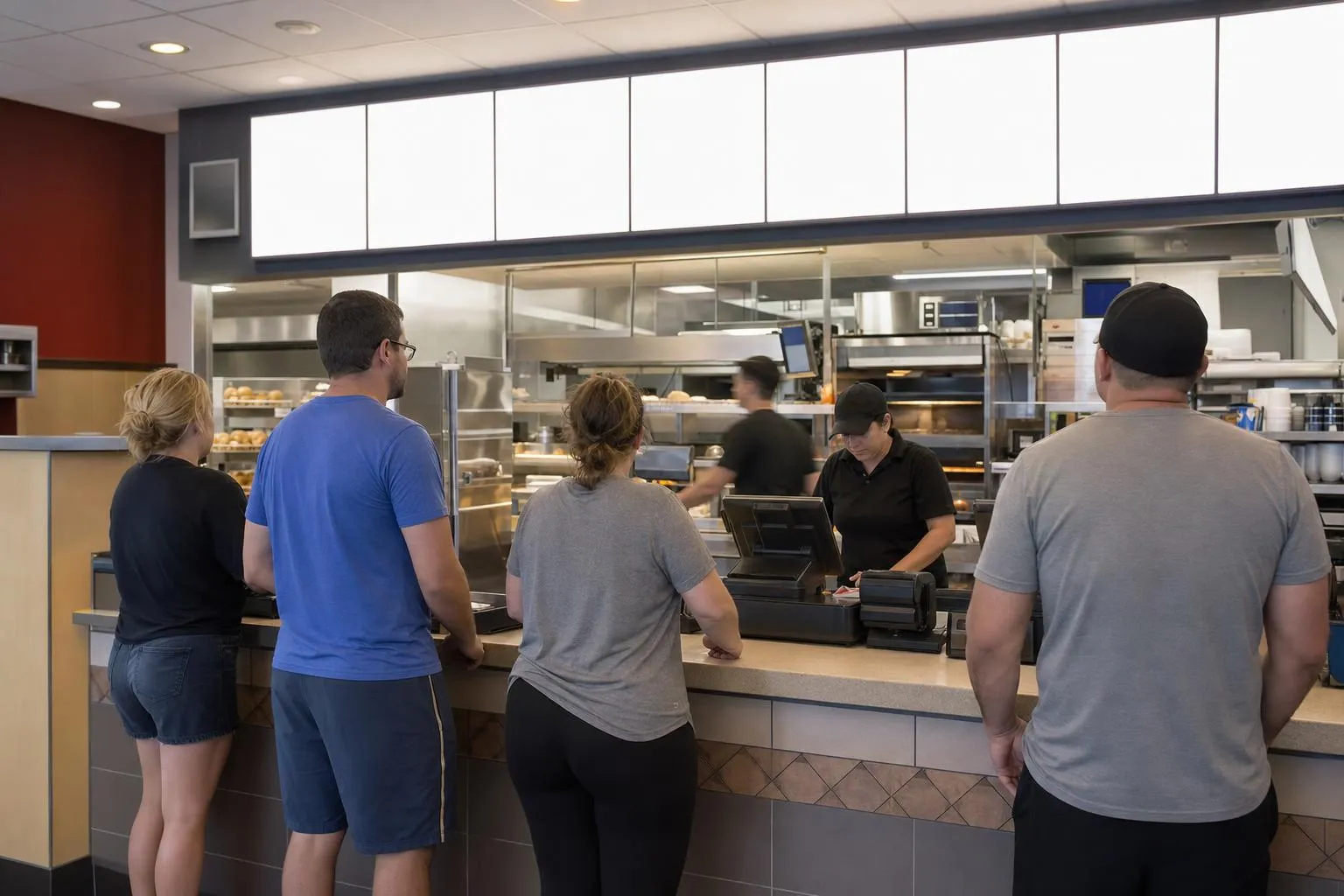
California’s Fast Food Council finalized its 2026 minimum wage at $22 per hour for fast-food workers at chains with 60 or more locations nationally. The rate takes effect January 1 and represents a $2 increase from the $20 floor that went into effect in April 2024. For independent operators not subject to the council’s direct authority, the practical effect is still substantial: the $22 floor will pull base wages upward across the California labor market, and operators in adjacent states are already seeing the signal.
The council’s authority under AB 1228 covers limited-service restaurants in chains meeting the 60-location threshold. Single-unit independent operators and smaller chains are not directly covered — they fall under California’s existing statewide minimum of $16.50 for 2025. But market dynamics rarely respect statutory lines. In high-cost California metros, independent operators competing for the same labor pool as McDonald’s and Chipotle are already bidding at or above $20 to hire.
The margin math for affected operators
For a quick-service location with 20 hourly workers averaging 32 hours per week at $20, the annualized wage bill is approximately $665,600. Moving to $22 adds $66,560 per year before payroll taxes and benefits. On a $2 million revenue location with a 12% net margin ($240,000), that is a 27% reduction in net income unless offset.
The common offsets are: price increases, labor-hour reduction through scheduling optimization, and automation of specific roles. Each has a ceiling and a cost.
Price increases on fast-food items above a threshold trigger meaningful traffic loss. Operators in Los Angeles and the Bay Area who raised prices 4–6% in response to the 2024 increase reported average traffic declines of 3–5% in the following quarter. The math works out approximately neutral, which is not a win when you are also absorbing higher wages.
Where scheduling optimization actually yields results
Scheduling software — whether through a standalone tool or a POS-integrated labor module — is the highest-ROI response to wage pressure in most operations. The typical finding: most operators are scheduling 8–12% more labor hours than they need during off-peak periods because managers use historical staffing levels rather than forward demand forecasting.
A San Diego fast-casual operator tracked by RestaurantOwners.news cut scheduled labor hours by 9.4% over a 60-day scheduling optimization project while maintaining customer satisfaction scores within the normal range. At $22/hr, that 9.4% reduction is worth roughly $47,000 per year per location.
The tools vary. Toast’s built-in scheduling module, Homebase, and 7shifts all offer demand-based scheduling at price points accessible to independent operators. The key is tying the scheduling tool to POS sales data so that staffing levels track actual cover flow rather than manager intuition.
Automation: which roles pencil and which don’t
The honest answer is that automation ROI depends heavily on transaction volume and capital access. Self-order kiosks pencil at high-volume fast-food locations — $8,000–$12,000 per kiosk, with a payback period of 12–18 months at the current California minimum if the kiosk handles 30–40% of orders. At lower volumes, the math is weaker.
Kitchen automation (fry automation, automated assembly lines) is capital-intensive and makes sense only at significant scale or in the context of a new build-out. Most independent operators are better served by scheduling optimization and menu simplification — reducing the number of SKUs the kitchen has to produce reduces labor time per order without capital investment.
The roles that do not automate well: hospitality-facing roles, food prep requiring judgment (proteins, sauces), and any function where quality variance is customer-visible. The roles that automate reasonably well: drink dispensing, standardized assembly, order taking.